“At Home” vs “Legal” DNA Tests: Which One Do You Need in North Carolina?
When questions about paternity arise, many parents turn to DNA testing for answers. A quick online search shows dozens of “at home” DNA kits that promise fast and affordable results. At the same time, attorneys, courts, and child support agencies often require a very different type of testing.
Understanding the difference between at home DNA tests and legal DNA tests can help you choose the option that truly fits your situation in North Carolina.
This guide breaks it down in simple terms so you can make an informed decision with clarity and confidence.
What Is an “At Home” DNA Test?
An at home DNA test is usually a kit you order online or buy at a store. The kit is mailed to your home, and you collect the cheek swab samples yourself. You then mail the samples back to a lab for analysis.
These tests are sometimes called “peace of mind” or “informational” tests.
When an At Home Test May Be Helpful
At home tests may be useful when:
- You are seeking personal reassurance
- There are no legal or court related matters involved
- All parties agree the results are for private knowledge only
Important Limitations to Understand
At home DNA tests are not court admissible in North Carolina. This is true even if the lab itself is accredited.
Because there is no third party verification of who provided the samples, the results cannot be used for:
- Child support cases
- Custody or visitation matters
- Birth certificate changes
- Immigration cases
- Any court or government agency requirement
Once results are issued from an at home kit, they typically cannot be upgraded or converted into legal results later.
What Is a Legal DNA Test?
A legal DNA test follows a strict and documented process designed to ensure accuracy, identity verification, and proper handling of samples from start to finish.
This process is known as chain of custody.
What Makes a DNA Test “Legal”
A court admissible DNA test includes:
- Identity verification of all participants
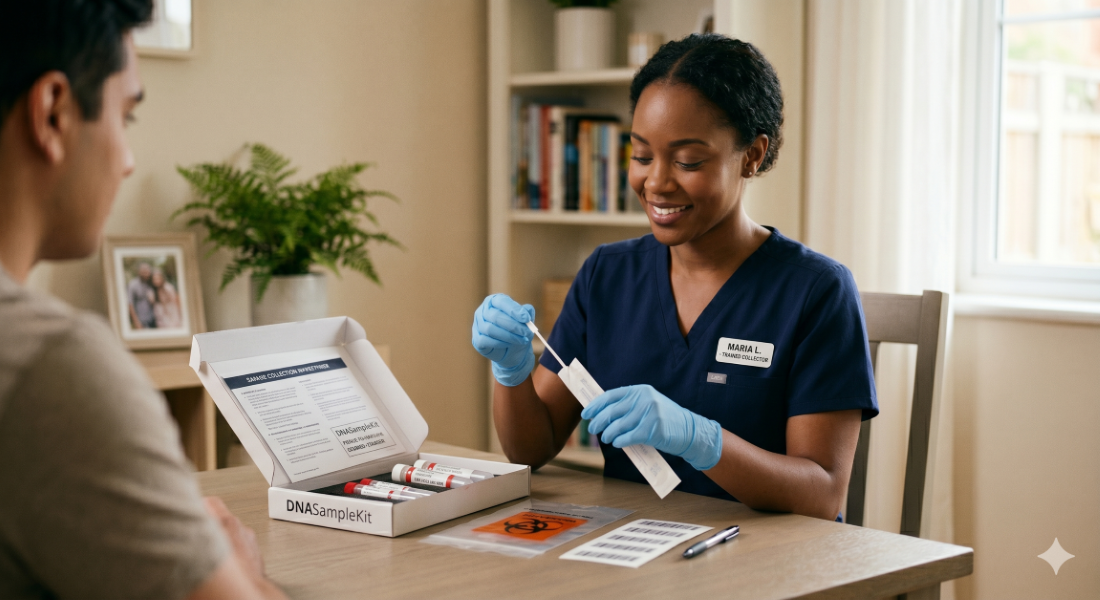
- Professional sample collection by a trained collector
- Proper documentation at every step
- Secure handling and transport of samples
- Testing completed by an accredited laboratory
Because these steps are followed carefully, legal DNA test results are accepted by courts and agencies throughout North Carolina.
When a Legal DNA Test Is Required in North Carolina
You will need a legal DNA test if the results may be used for:
- Child support establishment or modification
- Custody or visitation cases
- Court ordered paternity testing
- Adding or removing a father from a birth certificate
- Adoption or inheritance related matters
- Immigration applications
If there is any chance the results could become part of a legal process, starting with a court admissible test is almost always the safest choice.
Why Many Families Choose Legal Testing First
Parents often begin with an at home test believing it will save time or money. Unfortunately, when legal matters arise later, they find themselves needing to retest.
This can mean:
- Paying for two tests instead of one
- Repeating an emotionally sensitive process
- Delaying custody or support decisions
Choosing legal testing from the beginning provides answers that hold up when it matters most.
Mobile Legal DNA Testing in North Carolina
Legal DNA testing does not have to involve a clinic visit or long wait times.
Professional mobile DNA collection allows samples to be collected privately at a location that works for your family. This may include your home, workplace, hospital, or another agreed upon setting.
Mobile collection offers:
- Privacy and discretion
- Flexible scheduling
- Reduced stress for parents and children
- Proper chain of custody documentation
This approach is especially helpful for families navigating sensitive circumstances who value professionalism and respect.
Where Relationship Testing Fits In
Relationship DNA testing, such as siblingship or grandparentage testing, may be appropriate in some situations when an alleged father is unavailable.
These tests can sometimes be court admissible if they follow legal collection procedures. However, they are typically more complex and depend on the specific circumstances involved.
A knowledgeable DNA professional can help determine when these options apply.
Choosing the Right Test for Your Situation
A simple way to decide:
- If the results are only for personal knowledge, an at home test may be enough.
- If the results may affect a child’s future, legal rights, or court decisions, a court admissible DNA test is the better choice.
When in doubt, starting with legal testing provides answers you can rely on without needing to repeat the process later.
If you need court admissible paternity testing in North Carolina or have questions about which option is right for your situation, call us today for confidential guidance.
Final Thoughts
Paternity questions are deeply personal and often emotional. Having accurate, legally sound answers helps families move forward with confidence, clarity, and peace of mind.
Understanding the difference between at home and legal DNA tests empowers you to choose the path that protects your privacy while meeting your needs.
If you need court admissible paternity testing in North Carolina or have questions about which option is right for your situation, call us today for confidential guidance.
